Why End-Grain Wood
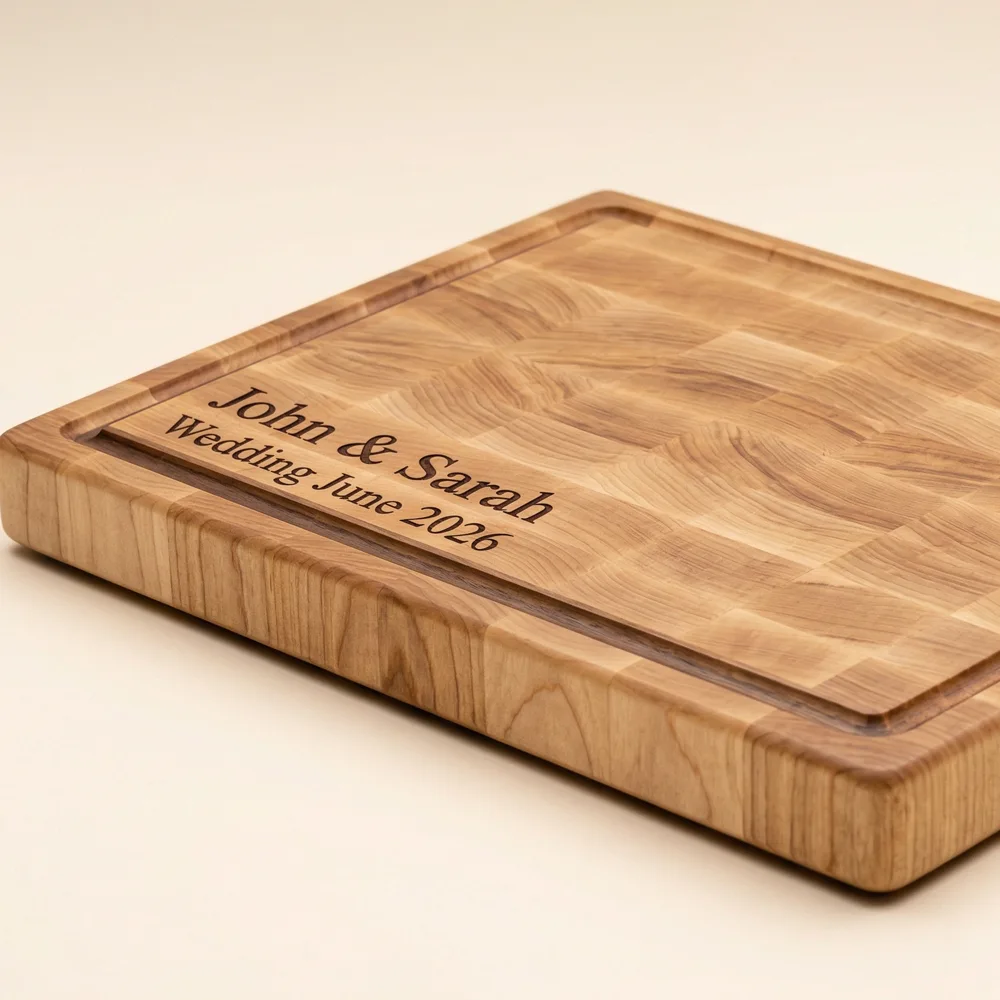
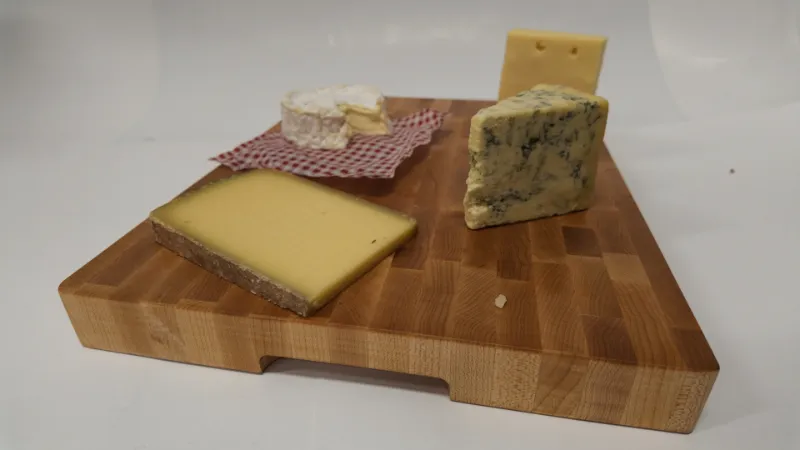
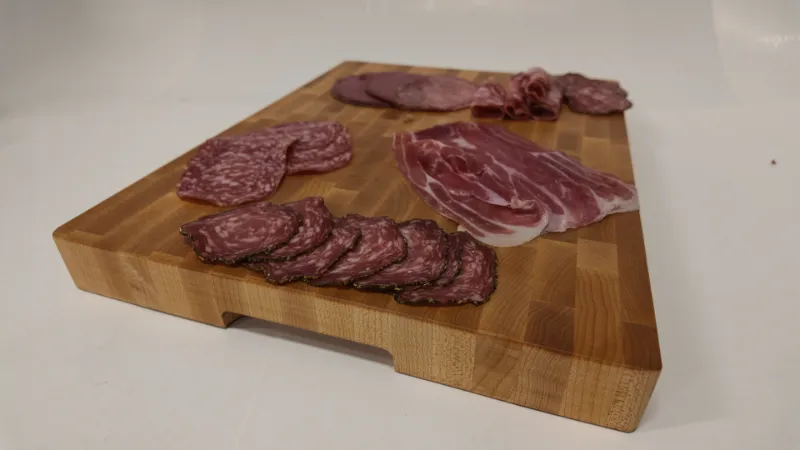
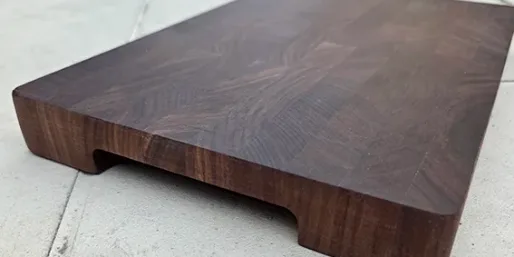
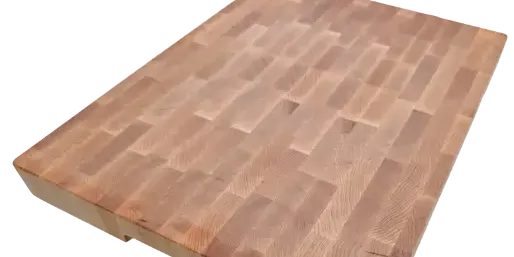
End-grain boards expose the cut ends of the wood fibres so that knife edges slip between them rather than slicing across them. The result: blades stay sharper for longer, and the surface self-heals over time. The alternative, side-grain, is much simpler (and cheaper) to produce, but has a few disadvantages. The key issue with side-grain is that as you cut away wood fibres, the holes and cuts may keep moisture and bacteria, resulting in a less hygienic surface. This is avoided with end-grain, there is a reason why butchers blocks are made with end-grain wood.
Why Maple with Walnut inlay
Hard Maple sits in the sweet spot — dense enough to resist scoring, soft enough to be kind to steel, and tight-grained enough to stay hygienic. Unlike bamboo it won’t dull your knives, and unlike oak it doesn’t trap moisture which can keep bacteria alive in your chopping board. American walnut is another wood that occupies the Goldilocks zone of not too hard, not too soft. In addition, the light colour of the maple and the dark colour of the walnut creates a great contrast for personalised wooden chopping boards.
Care & maintenance
Rinse under warm water and wipe dry after use. Never put your board in the dishwasher or leave it submerged. When the surface looks dry, refresh with a coat of oil — once a month for the first six months, then a few times a year. With this care, your board will outlive most of your kitchen.
Delivery & returns
Free delivery across the UK. As each board is made to order, dispatch is approximately 10 days from purchase. Boards that are not personalised can be returned the first 14 days if unused. Personalised wooden boards are only returned if we made a mistake. However, we want you to be happy with your board, so feel free to contact us if you are not 100 percent satisfied. We use Shopify to take payments securely, and you can use Google Pay, Apple Pay, Visa, Mastercard, Klarna and American Express.